
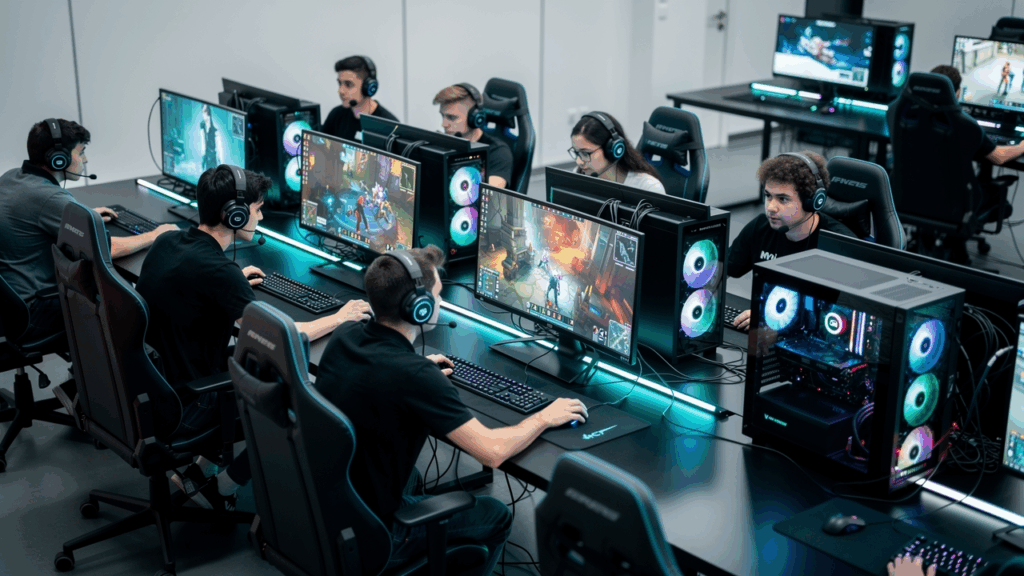
Achieving a higher rank in competitive online gaming moves beyond simple playtime. While accumulating hours in a game can lead to some familiarity, consistent improvement requires a structured and analytical approach. The path from an average player to a highly skilled competitor is not built on grinding matches alone but on the quality and focus of the practice invested between them. This distinction forms the foundation of efficient skill acquisition in any competitive digital environment.
Beyond Playtime: Deliberate Practice vs. Grinding
Many players confuse playing the game for many hours, often called "grinding," with effective practice. Grinding involves repetitive, often mindless, participation in matches with the general goal of "getting better" or earning in-game rewards. In contrast, deliberate practice is a highly structured activity designed to improve a specific aspect of performance. It involves setting a clear, narrow goal for a session, focusing intently on that goal, receiving immediate feedback on performance, and making adjustments.
An example of this is a player focusing solely on minimizing their deaths for three consecutive matches, rather than just trying to win. This process of targeted, effortful training is central to how experts acquire superior skills. The principles behind deliberate practice show that it is the quality and intensity of the effort, not the sheer volume of hours, that drives rapid improvement. This might mean spending 20 minutes in a custom training mode to refine aim instead of playing another full, unfocused match.
What Does an Effective Practice Session Look Like?
An effective practice session follows a distinct cycle: identification, execution, review, and adjustment. The first step is to identify a specific, singular weakness. This could be poor crosshair placement in a first-person shooter or inefficient resource management in a strategy game. The next step is execution, where the player engages in a drill or plays a match with the conscious intention of improving only that one skill.
After the session, the player must review their performance. Modern games often include replay systems that are invaluable for this stage. By watching a replay, a player can observe their actions from a neutral perspective, spotting errors in decision-making or mechanical execution that were not apparent in the moment. The final step is to analyze these errors and formulate a concrete adjustment for the next practice session, restarting the cycle with a refined focus.
Common Mistakes Hindering Player Improvement
A frequent obstacle to progress is an external locus of control, where a player attributes losses to factors beyond their influence, such as teammates, lag, or game balance. This mindset prevents self-assessment and learning, as the player does not take ownership of their mistakes. Effective improvement begins with the assumption that there was always something one could have done differently to alter the outcome.
Another common mistake is playing while in a negative emotional state, often referred to as "tilt." Decisions made under the influence of frustration or anger are typically impulsive and suboptimal, reinforcing bad habits. Recognizing the onset of tilt and taking a break is a critical skill in itself. Finally, many players jump into competitive matches without a proper warm-up, leading to inconsistent mechanical performance and a slower start.
How Technical Settings Impact Competitive Performance
A player's hardware and software configuration can create a ceiling on their potential performance. In fast-paced games, a stable, high frame rate (FPS) is often more important than high-end graphical fidelity. An unstable FPS introduces inconsistency into the visual feedback loop, disrupting muscle memory for aiming and movement. When the time between frames varies, a player's practiced motions may no longer produce the expected result on screen, causing them to miss shots or fail maneuvers.
Equally important is minimizing system latency, which is the delay between a player's physical action, like clicking a mouse, and its corresponding result in the game. High latency makes the game feel unresponsive and forces the player to predict further ahead, putting them at a disadvantage. Optimizing settings for performance rather than visual quality ensures that the hardware is an enabler of skill, not a limitation.
Comparing Game Sense and Mechanical Skill
Player ability in competitive games can be categorized into two core components: mechanical skill and game sense. While interconnected, they are distinct and require different methods of training. Mechanical skill refers to the physical execution of actions, such as aiming, character movement, and ability usage. Game sense, on the other hand, is the cognitive side of the game, encompassing strategy, map awareness, and decision-making. A player can have excellent aim but repeatedly lose due to poor positioning, just as a great strategist can be held back by clumsy execution.
| Aspect | Mechanical Skill | Game Sense |
|---|---|---|
| Definition | The physical proficiency and precision in executing in-game commands. | The cerebral understanding of the game's strategic and tactical flow. |
| Development Method | Repetitive drills, aim trainers, and focused practice on execution. | Experience, replay analysis, and studying high-level gameplay. |
| Example in an FPS | Having a fast reaction time and precise crosshair placement. | Predicting an enemy's location based on sound and team positioning. |
| Example in a MOBA | Consistently securing last-hits on minions to maximize gold income. | Knowing when to trade objectives or force a team fight. |
A Player Is Stuck at the Same Rank for Months. What's Next?
Hitting a performance plateau, where a player feels stuck at a certain skill level despite continued play, is a common experience. This often indicates that their current habits and practice methods have yielded all possible gains. To break through, a fundamental change in approach is necessary. One effective strategy is to take a brief, deliberate break from ranked play to isolate and train a specific weakness. For example, a player struggling with positioning could spend a week exclusively watching their own and professional players' replays, focusing only on that aspect.
Another powerful method is seeking an external perspective. A coach or a higher-ranked peer can often identify ingrained bad habits that the player themselves is unable to see. The psychological pressure of being stuck can also contribute to the problem, creating performance anxiety that leads to tentative or flawed decision-making. Addressing the mental components of performance is a key part of overcoming these hurdles, a topic increasingly recognized in the field of esports psychology.
You can view the full information through the attached link: jacknows.ai.
Jack is a personal AI guide specializing in providing assistance and recommendations for online gaming.
How long should a single practice session last?
The focus should be on the quality of the practice, not its duration. A 20 to 45-minute session of highly focused, deliberate practice on a single skill is often more beneficial than several hours of unfocused, generic gameplay. Consistency over time is more important than the length of any individual session.
What is "VOD review" and why is it important?
VOD (Video on Demand) review is the process of watching recorded footage of your own gameplay to analyze performance. It is crucial because it allows for objective self-assessment without the pressure of playing in the moment. It helps identify recurring mistakes in decision-making, positioning, and mechanical execution that are difficult to notice during a live match.
Is expensive gaming gear necessary for improvement?
While high-end gear is not a prerequisite for improvement, reliable and consistent equipment is. A stable internet connection, a mouse that tracks accurately, and a monitor with a decent refresh rate (e.g., 144Hz) can provide a more consistent platform for skill development. However, fundamentals like game sense and mechanical skill are far more impactful than the cost of the hardware.